Core principles of the world’s greatest Hindu nation
“Let us understand Sadashiva’s concept of currency, wealth and economy: I am defining wealth as per Sadashiva from Agamas. Your ability to intelligently enrich the society in some form – enriching does not mean only through teaching, it can even be stitching their shoes. Even that is enriching; enriching in some form. Enriching humanity in some form and doing it very intelligently and inspiring humanity to contribute back to you, so you can continue to enrich – that is “wealth”. That is wealth consciousness. That’s the strategy for wealth.
Currency is modus operandi. The methodology through which interaction and transactions happen, is currency. If the wealth consciousness is awakened in multiple people and you make the currency more current, that is called economy. Understand I have defined these three words – wealth, currency and economy. End of the day just if your existence makes money you will not be bothered about money. Your very consciousness will live wealthy.
The economy Sadashiva is teaching is neither capitalism or communism nor socialism – it is Responsibilism. The responsibility you take that decides the kind of wealth that is going to be around you.”
~His Divine Holiness Sri Nithyananda Paramashivam, 5th Nov 2017, Bengaluru, India
Prosperity of Hindu Civilizations & Culture
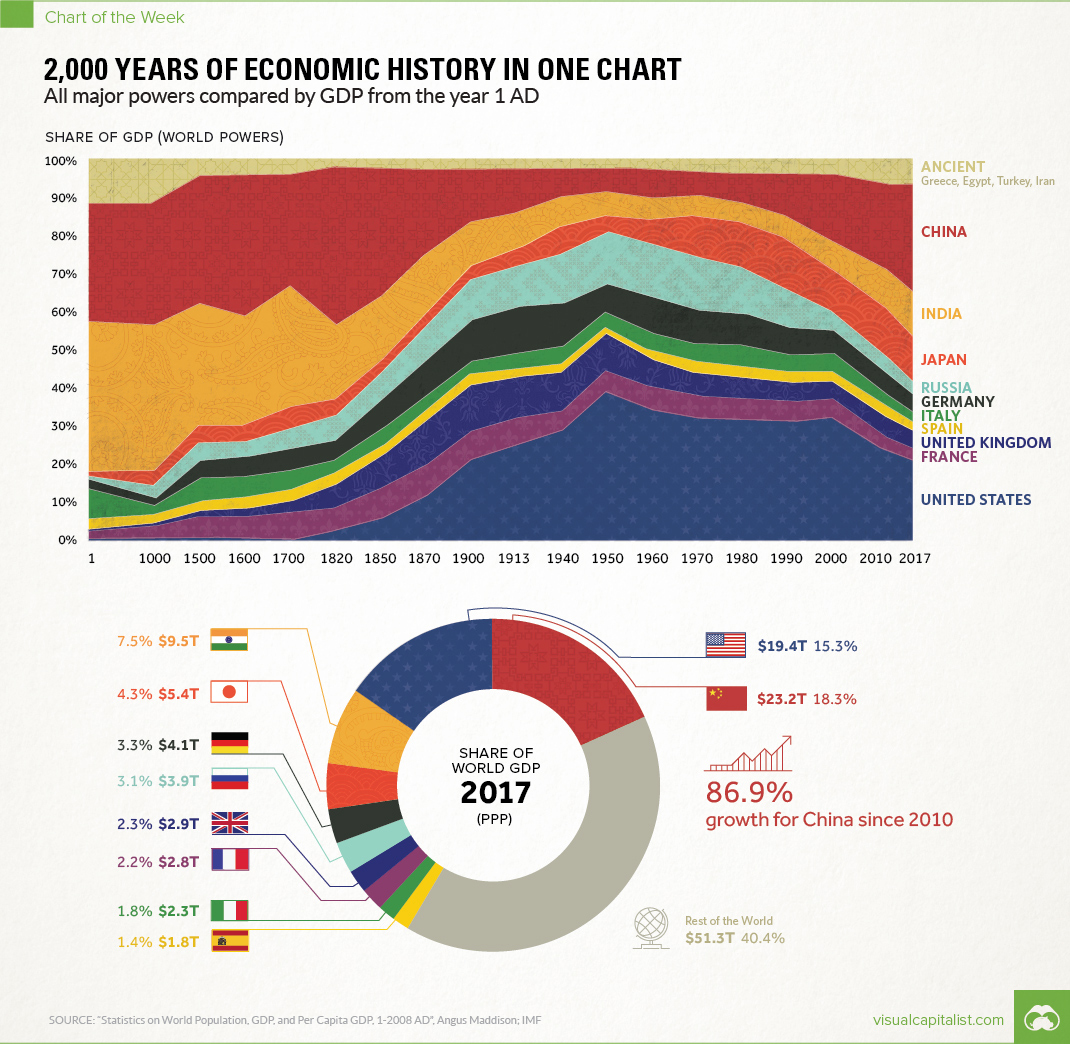
In the 1980s the Organization for Economic Cooperation and Development (OECD) commissioned a study under a famous economic historian Angus Maddison. His monumental research has shown that between years 1 and 1700 AD, India’s Hindu economy accounted for a quarter to one-third of the total world GDP, but began to decline sharply under foreign rule till in the 1950s their share of world GDP came down to 3 percent.
Pew Research on religious groups and Wall Street Journal reports that Hindus are the best educated religious group in the U.S – 77% of American Hindus have a college degree, compared with an average of 27% for all U.S. adults. Hindus are the highest earning community in the US and highest tax paying community in many countries around the world.
Hindu economic principles – which promote abundance in both the inner and outer worlds and have been proven to create wealthy communities for many millennia – continue to be relevant in the modern world, thus disproving the limited views of economist and socialists such as Weber, Schweitzer and Kapp.
Many core principles of a Hindu economy are outlined as early as in the Rig Veda (X.117.4) and various Upanishads. Subsequently, there were several sources of economic ideas in Hindu texts: Kautilya’s Arthashastra (320 BC), Shura-Neetisaara, Dharmashaastras and other manuscripts penned by Apastambha, Vasistha, Yaajnavalkya and others [1], addressed sophisticated economic principles such as labor theory, supply-demand principles, and scarcity theory of value, among others.
Introduction to Hindu Economic Principles
Principle of Advaita (Oneness)
For the nation of KAILASASM, many applications of these economic principles are primarily from the Agamas authored by Paramashiva, the original author of the science of yoga and enlightenment. The Agamas can be considered applied science based on the principles in the Vedas and the Upanishads – which is Advaita. Ishavasya Upanishad says in its very first verse “Consciousness pervades everything”.
While this may imply that consciousness is the primary reality, and the objects it manifests as are secondary reality, the Veda-Agamas does not imply that the material world should not be taken into account – only that the ultimate reality (paramarthika satya) cannot be ignored and has to be taken into consideration. Which is why Paramashiva discusses wealth and economics in the Agamas. He sees wealth as a core expression of enlightenment, and details a framework to create a superconscious society through an Agamic economy.
Even sanyaas (monkhood), which means renunciation, means only renouncing one’s personal ties, but involves embracing and taking responsibility for the entire world [1].
Enlightenment based Ecosystem
According to Hindu economics, human goals or Purusharthas are four fold: artha (prosperity or wealth), kaama (pleasures), dharma (cosmic law) and moksha (liberation from the cycle of life and death). Thus, the traditional idea of wealth is only one part of the economic principles.
Two of the most important aspects that drive Hindu economy are:
Dharma – which can be interpreted as flowing with the cosmic law. Part of dharma is ethics. Hindu economic practices cannot be separated from ethics.
Moksha – realizing our true reality, that we are consciousness, we are in the space of “Oneness” or Advaita. Realizing this state and space of Oneness is described as enlightenment. Functioning in this world while in this space of enlightenment is called “Living Enlightenment” by His Divine Holiness.
Such a society using Advaita as a strategy for success is an “Enlightenment-based ecosystem”, and the economy is an enlightenment based (consciousness-based) economy. According to Paramashiva, all enlightenment-based ecosystems share certain behavioural patterns.
People First
Core theme that sets apart KAILASA’s economy is putting people first, ahead of profits and material wealth. This principle derives naturally from the focus on dharma and moksha.
“People are wealth, people are life, people are energy. Finally, people are God! Give everything to people. People bring everything you need. Whether it is basic things like food or things like love, joy, laughter everything people bring in your life. To enrich people, your involvement with people shows your involvement with life .” – HDH Sri Nithyananda Paramashivam
In Paramashiva’s economy in KAILASASM, the people and Paramashiva are co-creators of money, where our ability to be intelligently active and constantly contributing is true wealth. The ability to keep the currency current and moving gives value to the currency.
Core Characteristics of KAILASA’s Economic Practices
Equality and Equal Opportunity for Everyone
KAILASASM, the Hindu nation, aims to create the largest worldwide enlightenment ecosystem. As a consequence KAILASA’s goal is to establish a thriving economy based on the principles of Oneness and enlightenment for all. KAILASA’s goal is to legitimately prove that an economy operating on Hindu religious principles can generate wealth without exploitation, and create a political-economic framework that can provide equality and opportunity for everyone irrespective of their gender, color, creed, family origin, or any other differences. KAILASA’s economy would operate on the principle of the varnas which says that everyone has equal opportunity to seek the living of their choosing based on their guna-karma. Thus KAILASA is a contribution based economy, where success depends on “responsibilism” – the amount of responsibility one takes for the world.
His Divine Holiness has followed the practice of conferring the yagnopavita (the sacred thread that in mainstream practice worn only by Brahmin men) not only to women, but to everyone who is initiated, elevating everyone irrespective of their caste, creed, color, background into a seeker of enlightenment. KAILASA will be solidly established in this principle of equality.
Gender Equality
In Hindu economics, women were not only treated equal to men, but often elevated to a higher level. Several references from Atharvaveda (Brahmcharya Sukta) not only refer to the importance of education of women, but also acknowledge their central role in economics and prosperity of a family.
Girls should train themselves to become complete scholars and youthful through Brahmacharya and then enter married life.
Atharvaveda 11.5.18
Oh woman! You know everything. Please provide us strength of prosperity and wealth
Atharvaveda 7.47.2
KAILASASM embraces the philosophy of empowerment of women. His Divine Holiness has worked tirelessly for gender equality not only in the economic society, but also in the spiritual and religious realm. Women will be allowed to be priests in temples, and be able to take sanyaas (or monkhood). These are core and ancient practices of Hinduism as prescribed by Parmashiva in the Agamas.
As we mentioned before His Divine Holiness follows the practice of conferring the yagnopavita to women also, as per the original Veda-Agamas.
Non-violent and Non-Exploitative
Since flowing with consciousness or cosmic law (dharma) is an integral to KAILASA’s economy, non-violence and non-exploitativeness are core principles. This creates for the first time, an economy where the various identities of a person – their individual, corporate, national or global identities – are not in conflict with each other.
Ahimsa (non-violence), Asteya (non-stealing), Aparigragha (living with minimal needs) and Satya (living with the truth) have always been vows taken by sanyaasis. KAILASA will hence be a non-violent economy where exploitative industries like drugs or alcohol will not be allowed. Hinduism has always believed in a non-exploitative labor philosophy – workers are not given “wages” but are invested in the outcome. Equitable distribution of wealth based on the value of their skill and input gives them ownership of both the upside and the downside.
Second is the idea of “nonviolent money” where value is created purely based on businesses that enrich people (eliminating any business or economic practice that thrives on fear, greed and exploitation, such as insurance).
These principles also dictate that KAILASA’s economy will emphasize harmony with nature, with animals enjoying certain rights. Companies in KAILASA will be legally required to ensure that their practices are in alignment with nature, and protect the environment for the future.
Enriching & Charity (“Dhaana”)
The KAILASASM economy is built to reward the ability to intelligently enrich the society in some form and inspire humanity to contribute back to you, so you can continue to enrich – that is “wealth”. His Divine Holiness defines wealth based on its ability to circulate and create more wealth. KAILASA will encourage “Lakshmi’s wealth” (money which circulates) vs “Kubera’s wealth” (money that is static).
Charity was an important part of wealth: Rigved (X.117.4) says: “na sakhaa yo na dadaati sakhye sachaa bhuve sachamaanaaya pitvah” (A person is no friend if he does not help the needy; but one who helps is a real friend). In fact, a businessman was not considered successful in Hindu economics unless they shared their profit through charity.
The Taittreya Upanishad (1.11.13) says: Shraddayaa deyam. Shriyaa deyam. Hriyaa deyam. Bhiyaa deyam. Samvida deyam. (Give with commitment. Give generously. Give with humility. Give with respect. Give with understanding.). Swami Vivekananda made the quote from the Upanishads “Atmano mokshartam jagat hitayacha” (personal enlightenment comes from enriching the world) the motto of Sri Ramakrishna Mission.
The Bank of KAILASA will be structured to incentivize businesses that follow the practice of enriching the world and giving back to the society. Ancient Hindu practice was to give a percentage of income back to charity. KAILASA will actively encourage such a practice.
Key Benefits of KAILASA’s Economic System
Free Education
An important core principle of KAILASA’s economy (as specified by Parmashiva in the Agamas) is that anything that increases in value by being shared should be freely available to all e.g. education, open-source software. That way the growth of the individual and the growth of the society is directly aligned.
This translates into the idea that “Knowledge is Free”. The government of KAILASA will take up full responsibility for everyone’s education (not just children). The Agamas say that fees paid for education comes from gratitude, a very important concept that “pays it forward” in the society. Those who gain from education give from the space of gratitude. Gratitude is an important aspect of KAILASA’s economy. In fact, today those who give with gratitude for what they have gained are truly kings of the modern world, as they have taken on the role of monarchs of ancient times.
Holistic Healthcare & Food
Paramashiva says in the Agamas that anything required for day to day living and lifestyle should be created in a self-sufficient way in a healthy economy. In KAILASASM this applies to healthcare, clothing and food. Self-sufficient economies do not outsource their basic needs. But in the modern consumption-based economy, outsourcing things like food has led to creation of dependence of the society on food-like products, which leads to poor health. Traditional Hindu economy had two layers – sangha nidhi (wealth from the ocean) and paduma nidhi (wealth from the ground). Ground based wealth can be metal or grain.
KAILASA’s economy will focus on gold and grain. Grain will be an important part of the economy and can be traded for just like money. Modern society has created an imbalance in two ways – rampant consumerism has replaced food with food-like products, which has led to devaluation of grains and also plunging health. By elevating grain to the level of importance of gold, KAILASA will automatically create self-sustaining ecosystems where health is of highest priority.
Modern medicine focuses on sickness and cure – doctors are rewarded when they cure sick people, so they do not have immense incentive to keep people healthy in the first place. KAILASA’s economy will focus on holistic health and preventative care while being in harmony with nature. Modern medicine treats diseases as isolated bio-mechanical systems, without considering the human being. KAILASA’s health care will consider people as conscious beings which treat them holistically. This is a very important part of the “people-based” economy.
Investments and Innovation
In fact, the key insight here is that the fiat-currency model has been exported to both education and healthcare in this world leading to exploitative economies. In Paramashiva’s economy, currency only comes into play for projects that require the coordination of people and resources for long-term investments. But this currency should be based on contribution – trading time and energy to create money and ownership and responsibility should be distributed throughout the system.
As a result, KAILASA’s economic policy should encourage enormous investments in long-term projects, spur unlimited innovation in technology, arts, medicine, manufacturing, farming and other areas, much like it did in the past, creating innovators like Baudhayana (mathematics), Aryabhatta (astronomy), Brahmagupta (mathematics), Varahamihira (hydrology, geology), Nagarjuna (chemistry), Susruta (surgery) and others.
Beyond the -isms of Economics
Hindu economy is neither capitalism or socialism, nor is it communism – it is a realistic economic system for the modern day. It is not capitalism in the sense that it does not allow for all aspects of life to be commercialized by profit enterprise (e.g. education is free, and health care is non-exploitative). It is not communism where everyone is rewarded the same irrespective of what they do. It is a contribution based economy, based on “responsibilism”.
Other economic theories are based on infinite consumption. They treat people as objects to be exploited. Hindu economic principle considers people as conscious beings, catering to their enlightenment while ensuring their success both in the inner world as well as the outer world.
Conclusion
KAILASASM, an economy based solely on Hindu principles, is aiming to recreate the enlightenment ecosystem that is described in the Veda-Agamas, which fueled the unprecedented economic abundance experienced by ancient Hindu civilizations.
Where Paramashiva embodies and incarnates on Earth, the place where He lives is called KAILASASM. The latest incarnation of Paramashiva is His Divine Holiness Bhagavan Sri Nithyananda Paramashivam. His goal is to create a superconscious society through liberating economic practices outlined in the Agamas. These principles form the backbone of the Hindu Nation of KAILASASM, which focuses on consciousness based economic principles which emphasizes “people first” ideologies such as non-violence, harmony with nature, equality, equal opportunity, women’s empowerment, charity and gratitude. The hallmark of such a system would be free education, holistic health and food, prosperity and enlightenment for all.
H. D. Vinod, Editor, Handbook of Hindu Economics and Business, April 2013.
M.V. Nadkarni, Ethics for our Times: Essays in Gandhian Perspective: Second Edition, Oxford Press
Bhagavad Gita
Upanishads
Shiva Agamas
Disclaimer:
Unless specifically stated otherwise, nothing here is to be deemed an offer, solicitation, endorsement, or recommendation to buy or sell any general or specific product, service or security and should not be considered to constitute investment advice.
His Divine Holiness Bhagavan Nithyananda Paramashivam (HDH) is not part of nor any sort of representative or agent of the Reserve Bank of KAILASA and/or its affiliates. The Reserve Bank of KAILASA is grateful for HDH’s spiritual guidance and vision for Humanity towards the development of its foundational policies.
Today, on the auspicious occasion of Ganesha Chaturthi Festival, the Supreme Pontiff of Hinduism Jagatguru Mahasannidhanam His Divine Holiness Bhagavan Nithyananda Paramasivam released the Reserve Bank and currencies of KAILASA.
A milestone and historical moment for the SHRIKAILASA Nation, the only Hindu Nation existing today and all the practicing Hindus around the world.
His Divine Holiness welcomed all the practicing Hindus around the world and all who gathered for this special moment. Ganesha Pooja has been performed and the Supreme Pontiff blessed the whole World and the Universe.
‘Blessing on this auspicious Ganapathi Chaturthi day. Blessings to the whole World and to the Universe. Blessing to all of you on this auspicious day. Let the whole World be showered by the Ganapathi with all the ausicisness. All the best things from Kailasa.’ – His Divine Holiness
56 Hindu Nations
Hinduism had 56 Nations, including Kumara Kandam, which was the source of Hinduism connecting all of the Nations. Sanskrit was the language of ritual and connecting with Gods, Tamil was the spoken language, used to communicate between Human Beings. Both were complementing each other.
His Divine Holiness stressed that Kailasa does not make any territorial claims towards any of the 56 Nations. He is reviving the Grand Narrative of Hinduism which at the time was practiced as State Religion in all 56 States.
‘Kailasa is my humble effort to keep this Grand Narrative alive in one corner of the World.’ – His Divine Holiness
Kailasa formally declares all the 56 Nations as most favourable for building bilateral and trade relations with Kailasa.
KAILASA functions based on consciousness based economy. Your worth in KAILASA is your ability to manifest spiritual powers and powerful cognitions. Yoga will give you the nervous strength and destroy the fear of getting enlightened.
One integrated person is equivalent to 100 million dollars. The KAILASA economy is different. Integrity is the way to get KAILASA wherever you are. Getting grounded in deep love makes you manifest integrity. Learn integrity by going to temple everyday, doing Anmartha puja, doing yoga, spiritual practices of power manifestation. One person integrated into this lifestyle is equivalent to a hundred billion dollars in KAILASA economy.
KAILASA is getting built like a large Hindu joint family structure! Till death, parents are owners, because they never write it off; they only will the property. The youngsters will be waiting to destroy the properties by running riot. So, that is the best system; never writing, only willing. Till parents are alive, you have to learn money management and the principles of economy. Your hormones out of other casualness and other life destructive patterns would not make you a pauper. That’s the beauty of Hindu joint family economy. It never leaves anyone poor. Always everything is provided for everyone. If you achieve anything on your own it is called excelling.
Excerpts from Nithya Satsang delivered on 19 August, 2020by Supreme Pontiff of Hinduism, Jagatguru Mahasannidhanam, His Divine Holiness Bhagavan Nithyananda Paramashivam
Everything is ready for launching the Reserve Bank of KAILASA and Federal Reserve of KAILASA and the 8 units associated to Reserve Bank of KAILASA. With the grace of Ganapati and Paramashiva, the Reserve Bank of KAILASA is already international news, not just regional or national!
Let me introduce KAILASA in few words: Hinduism had 56 nations – Pandya, Chola, Kannada, Telanga, Gurjara, Surangi, Kashi, Gandhara, Nepala, Cambodia – Kamboja, Sri Lanka – Lankapuri… 56 nations called Akhanda Bharat from present day Afghanistan – Gandhara – from where Gandhari and Sakuni came, to this side Nepala from where mother Sita came. All the currencies we used in the 56 Hindu nations and all the economic policies and strategies we used in those 56 nations, the internal economic policies and economic policies for external trade, I am trying to revive and make them as a legitimate functional system. As I said many times, Hinduism needs revivors not reformers. I am not reformer, I am revivor.
So this 56 Hindu nations, whatever currencies and policies and strategies we had, last two years we worked and studied more than 100 books. 8 sanyasis helped me to study, collect and organise. With this we have evolved the policies and currencies. I have a beautiful map of akhanda bharat – all the 56 Hindu nations. You can see historically we had all these 56 nations as Hindu nations.
In Hinduism, gold is not only valuable, it is sacred. Gold is given a religious sacred status in Hinduism. So, all KAILASA currencies will be printed only in pure gold. One tola is one kaasu. In sanskrit, the KAILASA currency will be called as swarna mudra or swarna pushpa. In english it will be called Kailashian dollar. In tamil – porkaasu. 1 tola gold in modern day measurement will be almost 11.6638038 gms grams. I tola gold will be called as 1 kailashian dollar. By its own weight and possession, it will have value. We have kaal kasu, ara kaasu, 1 porkaasu, 2 kaasu, 3 kaasu, 4 kaasu, 5 kaasu, 10 kaasu…Those are the units in which the coins are ready. All the printing, minting everything is done. On vinayaka chaturthi day I will be introducing it. The compilation of the policies will also be done. It will all be released.
I am trying to revive and make the Hindu coins, currencies, economic system as legitimate and functional. Hindu needs revivors, not reformers. I want everything to be revived as it was. Thanks to my team which worked tirelessly and sincerely past two years researching. How coins looked in keeladi, in chola kingdom, in surangi kingdom, in indus civilization, in ganges civilization..Thanks to all the researchers and archaeologists who uploaded all that in the internet or published as books. We have tried to make them as close as possible to what we have collected.
On ganesha Chaturthi, with the grace of Ganapati, Paramashiva, Venkateshwara Swami, Swarnakarshana Bhairava, it will be a ritualistic inauguration. Making it functional may happen very soon. I have lots of books which we referred, which comes to more than 100 books, 360 articles, and researcher papers from the internet and other sources. We made a document, acknowledging, thanking everyone. The exact, as close as possible to those coin models, to those formats we tried to revive. So I thank everyone who supported me intellectually, and who shared time, treasure, talent. Also Hinduism considers grain as one of the wealth, so grains will be used for barter system.
The economic policies of KAILASA, Reserve Bank will be following vedas and agamas. For example: a vaideeha or shivacharya or bhattacharya or deekshai who is a practising Brahmana by the lifestyle not just by birth but by varna, those brahmins do all the sandhya vandana, shiva puja, paramartha puja, atmaartha puja and they they get punya which is the cosmic currency with which they can go to any loka and live. They also get currency like swarna mudra, kailashian dollar to run their day-to-day life. KAILASA is going to follow the same economic principles. Practising varna based Brahmanas can encash the lifestyle, spiritual and religious practices and teachings. Not only they get punya – cosmic currency, they get country’s currency also!
KAILASA currency will be gold because the vedas give gold status of not just precious but as sacred. Paramashiva is himself described as Hiranya Roopaya and Mahalakshmi as Swarnavarnaam. Hinduism also declares many other things as dana. All those will get legitimate status of wealth. I will read out the names. So for each 1 swarna mudra, 1 por kaasu, 1 kailashian dollar. We made this in 25 designs. Its weight and worth will be the same. Designs we made with what was used in the 56 nations. 2 swarna mudra will have another 20 type. The kaal kaasu will have some 10 types.
Definitions, synonyms for dana in Hindu tradition:
Dravyam – material
Viththam – currency, goods
Svaapatheyam – owned earned property
Riktham – inherited property
Ruktham – possession
Dhanam – money
Vasu – land
Hiranyam – gold.
Dravinam – movable property
Dyumnam – power and strength
Artha – business concern, work
Rai – riches
Vibhava – magnanimity, omnipresence, power
The methods through which people can earn currencies are detailedly described. Paramashiva has declared that food has to be completely freely available, so we are going to follow the same procedure. Not only guru should not charge the student, if guru does not have money to feed the students, he has to go and beg and the students have to be given all the things needed besides education. Intention to study is worshipped in Hindu tradition. If a child has the intention to study, he becomes a Brahmachari. From that moment the guru is responsible for giving him food, shelter and everything needed for him. Guru is responsible for providing everything to a Brahmachari for him to study. If guru is not wealthy enough, he is allowed to beg. The disciples may also beg, but the guru is bound to provide. We are going to be following the same policy. So all your survival needs during study period is also free.
My vision is to provide all these services to all the 2 million Hindus all over the world. With the grace of Paramashiva we will be able to do it. In Hindu tradition, doctors are paid based on the village’s income. Whole village gives grain and the doctor ensures the whole village is healthy. Only by you falling sick, the doctor gets money. Then how can you expect he will pray for your health? Policies have to be practical. If policies are impractical and constantly accusing the doctors, it is wrong. Policies should be right. When the doctor knows “my area’s wealth is going to make me more healthy”, he will do research and he will make all effort to make everyone healthy. Then your body is not income source for him, your active life is an important source for him… So in KAILASA we will have same policies.
All the economic policies are up and it runs to more than 300 pages. Here I give an open request: anybody who has knowledge in Hindu economic principles, from shastras or modern application of shastras, in any form, like sending some old books, or sharing your thoughts, suggestions, recommendations. With gratitude we will accept your support. You can send suggestions to this email and we will add this into our economic policies. Only thing, kindly send the proof of evidence that they are from the Hindu religion. We pray to Vedamata to revive Santana Hindu Dharma.
Like how they do the model budget, we need a model Hindu community in some corner of the world, for which we were putting in tremendous efforts. Now, with Ganapati and Paramashiva’s blessings and blessings of all the gods and goddesses of KAILASA, it is happening.
Excerpts from Nithya Satsang delivered on 18 August, 2020by Supreme Pontiff of Hinduism, Jagatguru Mahasannidhanam, His Divine Holiness Bhagavan Nithyananda Paramashivam
In Hindu tradition, knowledge is sacred. We never try to suppress, oppress, dampen the authority of the knowledge using the concept of sacred. The concept of sacred is used only to strengthen your intensity of seeking, your intention to gain more and more knowledge.
Atato brahma jijnasat – Let us inquire into the ultimate reality existence
Knowledge is sacred. Vidya is divya. We never used the principle called sacred to suppress, oppress, exploration of knowledge. That is the beauty of the tradition. That is why are so open to upgrading, evolving ourselves. It is a living civilization. It was, it is, it will be.
सा विद्या या विमुक्तये Sā vidyā yā vimuktaye
That is why vidya is given the form of a woman. In Hindu tradition,the woman of the house – her decision, her will persistence – makes the whole family flow in the direction of enlightenment. I have seen how passively, silently, non aggressively, with tremendous will persistence and patience, my own mother led the whole family towards the direction of enlightenment just because she is from that heritage. I don’t think she even consciously planned. Just because she inherited the heritage, she kept it alive very passively. I have never seen my mother shouting or fighting or screaming with my grandmother, means her mother-in-law or my father, her husband – or with anybody in the family! I won’t say she did not have the difficulties of a middle class or lower middle class Hindu family in an indian village. She had all the difficulties. But she always kept the whole thing together, drove the whole thing in the direction of jeevan mukti just because this is what she learnt from the elders. The ecosystem’s inspiration!
Till you are 25, the ecosystem will inspire you. After you cross 25, you should become the strength for the ecosystem. That is life. You can’t go on expecting that the ecosystem should treat you cutely and that it should be strength and support for you. First 25 years, it is okay. But in modern day, you are far more mentally, psychologically, informatively more mature than a Hindu village kid, so you don’t need 25 years. By the time you are 18 or even 16, you claim so much of freedom, power and authority due to the society structure, but you don’t take the responsibility.
All Hindu kids: claiming so much of freedom and throwing tantrum without taking the responsibility, you are destroying Hinduism and the living enlightenment tradition. By 16 or 18, all Hindu kids should start supporting the ecosystem of enlightenment. You can’t be anymore just sucking the ecosystem, be a load on it, throwing all your tantrums and expecting you to be treated very cutely. No. The moment you turn 18, you should become ferocious with yourself and learn to be the support for the ecosystem.
Dharmo rakshati rakshitaha – When you support / protect dharma, dharma supports / protects you.
This principle I am talking now is the economic policy, strategy of the principle of Hinduism. The Hindu civilization is focused on jeevan mukti/enlightenment/moksha. Whether it follows shaiva tradition or ganapati tradition, or shakta or saura or kaumaara tradition or guru worship or vaishnava sampradayas, or any sampradaya, basically the ecosystem, a civilization, samsthana, is focused on enlightenment. People who keep this knowledge of enlightenment and teach, are paid, sponsored at multilevels: paid regularly and sponsored for specific events and supported through grants and donations.
And the people who maintain the social integrity by providing protection from the external destructive/invading forces or internally revolting forces – the kshatriyas – are paid and given awards and rewards. The knowledge keepers who keep the integrity and efficacy of the knowledge are the brahmanas. Those who give protection from external invasions and internal revolts and keep the living enlightenment – jeevan mukthi – lifestyle, the kshatriyas, get paid and are given awards and rewards when they demonstrate the valour of protecting the dharma. Vaishyas are supported with knowledge, encouraged with infrastructure and market, given protection for their wealth by the state, and in turn for all these services from the state to the vaishyas, they pay tax to the state. Shudras are empowered with land and all the equipment needed to grow grains or everything needed for the sustenance of the life, paid, supported with all their needs. It is an amazing unique, very organised, legitimate civilization.
From the pre-bronzian age, the only civilization still alive of course in a very critical stage, beaten and broken, having lost all confidence on themselves is the Hindu tradition. They are constantly being told, “your ancestors are stupid and useless.” once you take away someone’s confidence about their heritage and past, he will not have a future, because he will not try to replicate the glory of his past in the future. He will just surrender to you and listen to you and do what you say as the right future. To enslave and kill a civilization, remove their confidence about their glorious past successfully, the poisoning done is what has happened to Hindu civilization. It is almost in the intensive / emergency care unit.
The only good news is, it is not dead. I am back to revive! I will not let it die.
चातुर्वर्ण्यं मया सृष्टं गुणकर्मविभागशः। तस्य कर्तारमपि मां विद्ध्यकर्तारमव्ययम्।।4.13।। Cāturvarṇyaṁ mayā sṛṣṭaṁ guṇakarmavibhāgaśaḥ, Tasya kartāramapi māṁ viddhyakartāramavyayam. The 4 categories of varnas were created by me according to the people’s qualities and activities. Although, I am the creator of this system, know me to be eternal and I will come back again and again to keep this system alive.
The only civilization still alive, not dead from pre-bronzian age, is Hindu civilization, varnashrama dharma. I will be back again and again and again, to keep this alive. Giving confidence to people on this system is Hindu economic principle.
For example: if a brahmin does agni hotra every day, teaches vedas to the kids, not only he is given a regular salary by the king, all the punya he acquires, the merit he acquires by these sacred actions, he not only gets KAILASA after death, he can encash his punya even as a usable currency like grains, precious gems, precious metals, and other items needed to run his life. During the ashwamedha yajna, putrakameshti yajna, other major yajnas, yagas, rituals done by the great kings in their kingdoms, they disburse the punya currency in bhu loka, this world’s day-to-day usage currencies.
This principle is going to be a very important principle in KAILASA economy. I am going to revive this principle
If you serve any temple run as per vedagamas, you get punya which not only you can use in KAILASA after you leave the body, you can encash them, withdraw as currency even for your day-to-day use which can be in the form of grain, precious gems and precious metals. I mean what I am saying. This is the fundamental policy with which the KAILASA economic strategy and policies are getting evolved. It is bringing economic legitimacy to the all religious actions, activities you perform.
For example, if you walk around arunachala, arunachala purana describes that you get certain punya with which you can achieve and enjoy KAILASA. Not only you get that, you also get the country’s currency to withdraw and receive in the form of grain, precious metal, precious gems. The ritual happening where all the disbursement happens is the yaga /yajna conducted by the kings in those days.
For example, when a brahmin comes, the senior brahmins decide, “this person is practicing this many vedic rituals and teachings, so he gets this much of punya in KAILASA and this much of country currency in the form of grains, precious gems, metals, clothes, whatever… This was the living economy of Hindu tradition, Hindu samasthanas and Hindu kingdoms. I will revive it with the grace of ganapati and Paramashiva and all the gods and goddesses of KAILASA, with their blessings, I will revive it!
These principles are elaborately described in vedas and agamas. That is going to form the basic structure of KAILASA economic policies and strategies. Everyone is supported so beautifully. No one feels insecure to manipulate or exploit the economy. That is the most beautiful structure of Hindu economy! It is a such a tremendous deep confidence building system and so much of security was given.
Let me openly declare: my gurus performed the yoga pattabhishekam in 1994 and have put me on the throne. All my last 26 years of life, whatever I tried to do in ramakrishna mission as a volunteer, brahmachari, sanyasi or after I started this sangha, all my economy policies were trying to revive these principles of Hinduism. How we can give confidence to people on the living enlightenment system and how that can become not only the cosmic currency, but even the country currency. I was trying various trial and error methods, but I tell you very confidently with the grace of Paramashiva, I am successful in coming to very balanced clear policies and principles which will intensely give confidence and secured feeling to the people so that they will be part of this whole धर्मो रक्षति रक्षितः “dharmo rakshati rakshitaha” meaning, “protecting dharma and letting dharma protect us”; empowering and protecting dharma so that it becomes a living energy to protect us!
I received this knowledge of Hindu economy policies and principles directly from the blessing of my guru – arunagiri yogishwara. I then learnt the history how it should be used to be a living reality, from the 230th gurumahasannidhanam of thondai mandala aadheenam, sri jnana prakasha desika paramacharya swamigal. I want to put this on record. Forever he should be remembered as “reviver of Hindu economic policies and principles”. He used to teach me how in those days the samsthanas received tax and how they distributed salaries, gifts, awards, rewards.
For example, when a brahmana performs something great, when he is a high achiever, he is supported and gifted with some things which strengthens his lifestyle. Same way, when a kshatriya performs something great and becomes a high achiever, he is gifted some things which supports and strengthens his valour and lifestyle and what is expected from him for a successful society! He gets glory, name and fame, and many women decide to marry him. He is glorified in such a way that the society so enamoured by his glory and valour. Same way, a vaishya, when he achieves something, the glorification done is different! The glorification done to him supports him in his profession to achieve more success. A great amazing, beautiful society was kept alive with the principle of enlightenment!
I want to tell and thank all the people who contributed and are contributing to this KAILASA by giving your time or treasure or talent: you are doing something absolutely good to yourself and the world by supporting this huge cause. It is with extreme integrity, sincerity, that a great possibility for human society, is tested, tried, actually succeeded and getting revived! The trial run is successful! I am not “reformer”, I am “reviver”.
In Hindu tradition, there are two layers in the economic principle. One is the currency. Technically the currency concept if I translate in sanskrit, it means the grain-based currency which just by possessing or owning, has it own utility value. Whether it is grains or precious metals, gems, by its own existence, it has a value and no other body is required to establish its value. By you owning and the way it is used and demanded by the healthy society, by this simple existence, it has value.
Second, the regulatory body always ensured that the principle of enlightenment was kept alive in all their regulatory principles. How and why gold should be considered as a precious metal. How and why what gems will be considered as precious…Everything! The whole regulating mechanism was enlightenment centric!
The king raja raja built huge temples. It is not that he built only the tanjore temple, he built a large number of temples. Krishna devraya built a large number of temples. All great known kings of Hinduism, whether cambodia or somnath, chidambaram or tanjore or Nepal or jagannath or sri lanka….Anywhere, where Hindu civilization was prevalent, it was all temple-centric and temple-based because that was the source of our knowledge, economic principles, systems and strategies. Temple building and sustenance was the most beautiful method to keep the economy current.
Currency has value as long as the current is kept alive. The current is kept alive to keep the value of the currency through this large sized temple building and running. The concept of common debt is the story of venkateswara borrowing money from kubera for his marriage and still repaying the loan!I it is most beautiful if you understand the story. You will understand the concept of common debt! You will understand how beautifully, dharmically, the modern day concept of common debt is expressed in this story of venkateswara.
The glory of the temple of the capital of Hindu kingdoms was actually the way they attracted the citizens from all over the world and the way they kept their citizens integrated, inspired and motivated to the kingdom. Amazing spiritual enlightenment based patriotism, enlightenment based economy, enlightenment based nationalism, enlightenment based integrity. Even when you have mood swings, confusions about your individual lifestyle and your individual balance sheet, and it is not giving you confidence about life, if your understanding about the common goal, about the concept of the civilization, if that is alive, you will not become a traitor. You will continue to be integrated and raise and raise and fit yourself, discovering yourself and discovering how to fit yourself into the society – both!
Every word I am uttering is the most beautiful principle of Hindu economic policies. This is the principle on which Hindu education and policy making happened, on which Hindu politics, administration, judiciary, economic principles and strategies were evolved and kept alive. Hindu currency was kept current, alive through this mechanism. This mechanism used to be stirring to keep the Hindu currency current.
Like how in the modern day government function, like in the post corona period, now, how every government is trying to revive its economy through various plans, policies, grants, every year, the Hindu kingdoms used to conduct the rituals, festivals to trigger and revive the economy, to keep its currency current. Sometimes people are made to build, support the common pool and sometimes the pool is taken out and shared with the people. But it was all done in a very dharmic way to keep the science of living enlightenment. Whether you are taxed, or given grants, everything was based on enlightenment/jeevan mukti. It was moksha based artha, moksha-centric artha. Moksha is kept as the first priority whether in dharma, artha or kama.
Just because we had a few failures in few wars and lost few lands due to traitors, doesn’t mean our principles are wrong. If you think that, you are a fool! It is like how a few fools are thinking that just if you are involved in voting alone during the election period once in five years, you can maintain the Hindu civilization. No! A constant involvement and activism is required to keep the Hindu civilization alive and to revive Hindu civilization. Unfortunately, modern Hindus strongly believe that if you make the right decision on the voting day and vote, it is all done. No, it is wrong! Everyday activism, involvement into the society is required to revive Hindu civilization and Hindu principles. I don’t know when Hindus are going to wake up to this truth.
But I will keep this truth alive in one corner of the world – in the form of KAILASA. KAILASA is the seed bank of Hinduism. It is just like how manu built a ship and kept all the best seeds alive to revive post-deluge, post-pralaya. Same way, I am building KAILASA and keeping all the seeds to keep all the best things of Hinduism to revive post pralaya.
सम्भवामि युगे युगे…! Sambhavāmi yuge yuge
I will come again and again to do this work. I have come for this work and I will perform it and I will achieve it! To tell you honestly, “I have done it.” I just have to do further expansion.
From 1 AD to the year 1700, bharat contributed about 30% of the world’s known GDP. For 1700 years, the period of recorded history. If you go to pre-recorded history, bharat only had GDP! The concept of GDP did not exist in any other part of the world. In the known world, the most organised, most ancient, the most continuous civilization was Hindu civilization. Unfortunately, Hindus have started believing that Hinduism is functional only for religious and enlightenment purposes and it is dysfunctional for politics or economic or social or judicial systems. Even Hindus are brainwashed. O Hindus! Please wake up to the truth! We were, we are and we will be a legitimate, functional system, not just spiritually, religiously, even economically, judicially, socially, politically in every level without compromising, altering, adulterating.
You don’t need reformers, you need revivers! O Hindus, wake up! Our ancestors were intelligent to evolve a system, so we don’t need reformers, we need revivers. I want this to be today’s message. All kailashians: spread this message to the whole world: we don’t need reformers, we need revivers! Hindus need to be told this. Blow the conch – shankhanatha! We need revivers not reformers. Enough reformers have harmed Hinduism as much as anti-Hindus. Reformers are as dangerous, destructive and negative as invaders, as anti-Hindus, to Hinduism. Reformers are disguised invaders. Reformers are the traitors used by the invaders to destroy Hinduism. We are strong enough, powerful enough principally. The principal and principles of Hinduism only need to be revived, it does not need to be reformed. Do the jaya gosha, shankhanatha, tirukkailaya vadya and tell the world: Hinduism needs revivers, not reformers!
The concept of dravya, dana in Hinduism is clearly defined in the amara koshas: for brahmanas, what is dana – wealth, for kshatriyas, what is dana – wealth, for vaishyas, what is dana – wealth, for shudras, what is dana – wealth.
These definitions form the fundamental economic principles of KAILASA.
Synonyms of the word dana:
Dravyam – material
Viththam – currency, goods. Goods bartered is also considered currency. Like I said, Hindu economy was grain based. By its own weight and possession, it is valuable. It does not need any central regulatory body to declare that this paper has this much of value. No. By just the possession of the semi-precious stone or precious stone or the grain, it brings value, due to its utility and demand in the society.
Svaapatheyam – owned, earned property
Riktham – inherited property. When you inherit a property, you also inherit the intention of your ancestor, tied, married to that property. So inheritance in Hinduism is a will. As long as you maintain that will, you have right over the property. If not, you don’t own that property any more! This was the way the Hindu tradition was kept alive! Hindu fathers will work for the seven generations of their children. Same way, they will inculcate the lifestyle, knowledge, principles in their children. Unfortunately now, in the modern day, neither they keep wealth for their children, nor inculcate Hindu values into the children. Both should be done. I want my followers to keep wealth for their next generation and inculcate these Hindu values into your next generation. The next generation also should respect the riktham – inherited property and the will of the ancestors.
Ruktham – possessing and enjoying and expanding it!
Danam – money
Vasu – land
Hiranyam – gold
Dravinam – movable property which is useful
Dyumnam – power and strength. It means the capacity to understand the principles of the economy and change the investments and keeping yourself alive, current, and your currency current.
Artha – business concern, work
Rai – riches
Vibhava – magnanimity, omnipresence, power
It is about understanding the omnipresence and capabilities of danam and keeping your magnanimity to keep the omnipresence alive all over the world. If you honour your commitment only they will honour their commitment. That is what is magnanimity. Kavikalpadruma gives the synonym of danam as daanyam. It means, The grain based economy and all other principles as I described from amarakosha now, are going to be forming the fundamental principles for Hindu economic policies and strategies. Hindu will is absolutely different from the legal paper used today for establishing inheritance.
Hindu will is lifestyle based. If you are from the varna of brahmana and you inherit your ancestors’ property and they were also brahmana by varna, only if you follow the principles of brahmana varna, you have the right over the property. It is so juicy and delicious even to understand artha shastra and Hindu economic principles! What brilliant ancestors we had! Definitions of danam in Hindu tradition: Dana – is the earth which bears the roots and seeds and that produces grains.
If at all our next generation starts tasting the Hindu economic policies, they will understand this is most beautiful, brilliant and delicious and they will just fall in love with it and simply the whole Hindu economic principles will be revived! My job is only to make you taste the deliciousness of Hindu economic principles by reviving the Hindu reserve bank and Hindu currency. Hindu knowledge is capable enough to revive itself, resurrect, re-establish itself, reignite the passion in you and excite you again. Just if I share the knowledge and educative, it is enough. That is all I am trying to do! I have so much more to share.



Recent Comments